There is an unbreakable rule in traditional martial arts culture, a line that separates the novice from the experienced practitioner: the Gi (Kimono) must never touch the asphalt. Crossing the dojo threshold into the street wearing your belt or training jacket is not just a matter of basic hygiene—preventing external bacteria from contaminating the tatami—but a profound error of etiquette and respect for the attire that represents your effort.
However, this mandate creates a logistical and aesthetic dilemma for the contemporary martial artist. How do we manage that transition between civilian life (the office, university, the street) and the rigor of training? For years, the answer was purely functional, but today, inspired by global sportswear fashion movements and "Pump Cover" culture, we are seeing the emergence of a new standard: oversized training clothing. This is not about carelessness, but a deliberate choice that combines the philosophy of Zanshin (a state of alertness and readiness) with the necessary comfort for physical recovery.
Why Oversized and not Fitted?
For the martial arts practitioner, oversized clothing acts as a decompression chamber between the outside world and the dojo. Unlike fitted or compression clothing, which has its specific place during intense physical activity to manage lactic acid and muscle oscillation, loose clothing offers superior benefits during transitional moments (pre and post-training).
The short answer is thermoregulation and psychology. A loose-fitting, heavy-weight top allows for more efficient body heat retention during passive warm-up, preparing the joints before class begins. Conversely, at the end of training, when the nervous system is overactive and the skin sensitive from the friction of randori (sparring), the tactile sensation of a non-constricting garment facilitates the shift to a parasympathetic state of rest and recovery.
From "Pump Cover" to "Dojo Cover"
To understand this trend, we must look to our "cousins" in weightlifting. In the fitness world, the term "Pump Cover" refers to a large sweatshirt or t-shirt worn to conceal the physique until the muscles are engorged with blood and warm. Gymshark and other brands have capitalized on this not just as a product, but as a mental tool: it's armor that allows you to focus on internal work without the distraction of external vanity until you're ready.
In the context of Dojo Style, we adapt this concept. The martial artist does not necessarily seek to "reveal" their muscles in front of the mirror, but they do need that "soft armor" before putting on the "hard armor" (the Gi).
The Psychology of "Enclothed Cognition"
Behavioral scientists have coined the term "Enclothed Cognition" to describe how clothing affects our psychological processes.
-
Compression Clothing: Sends a signal of "action," "alertness," "competence." It's ideal for the moment of combat.
-
Oversized Clothing: Sends a signal of "protection," "space," "comfort." It's ideal for pre-training mental preparation (focus) and post-training relaxation.
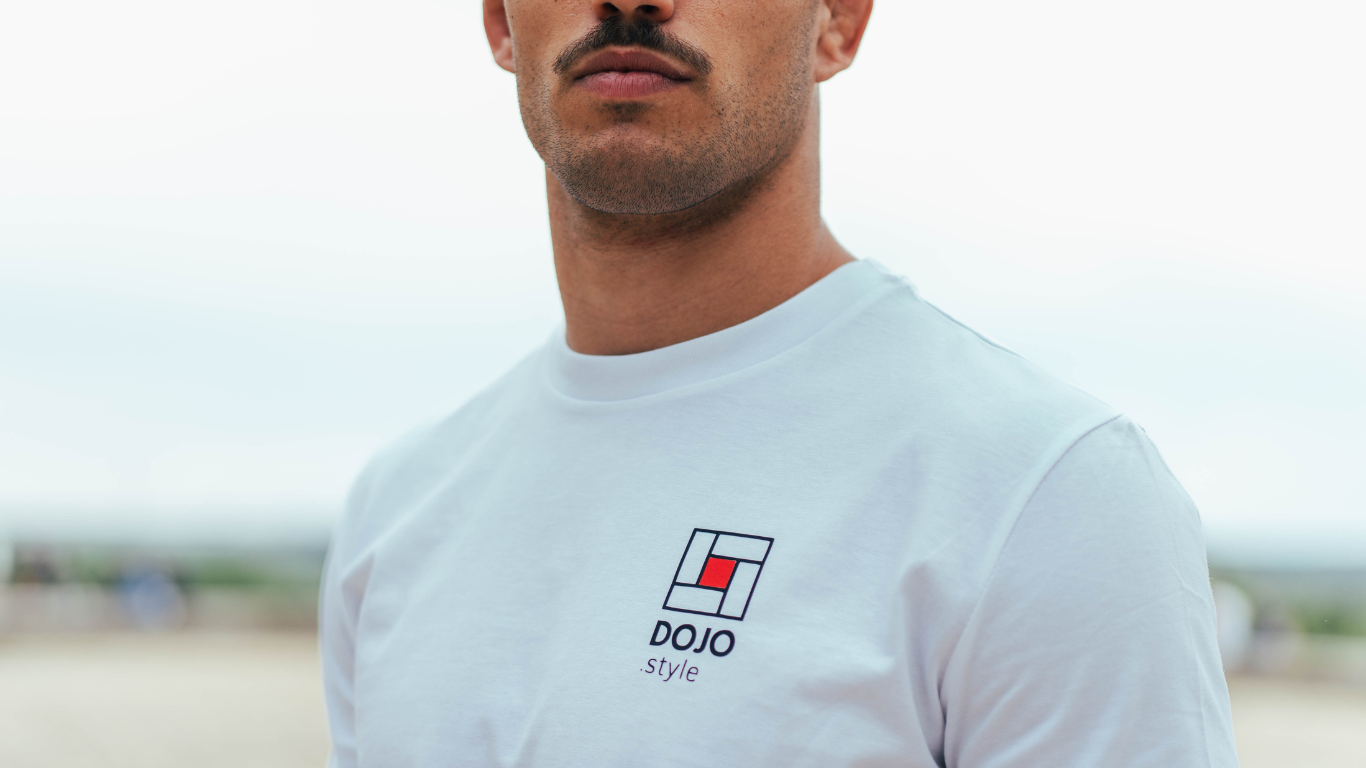
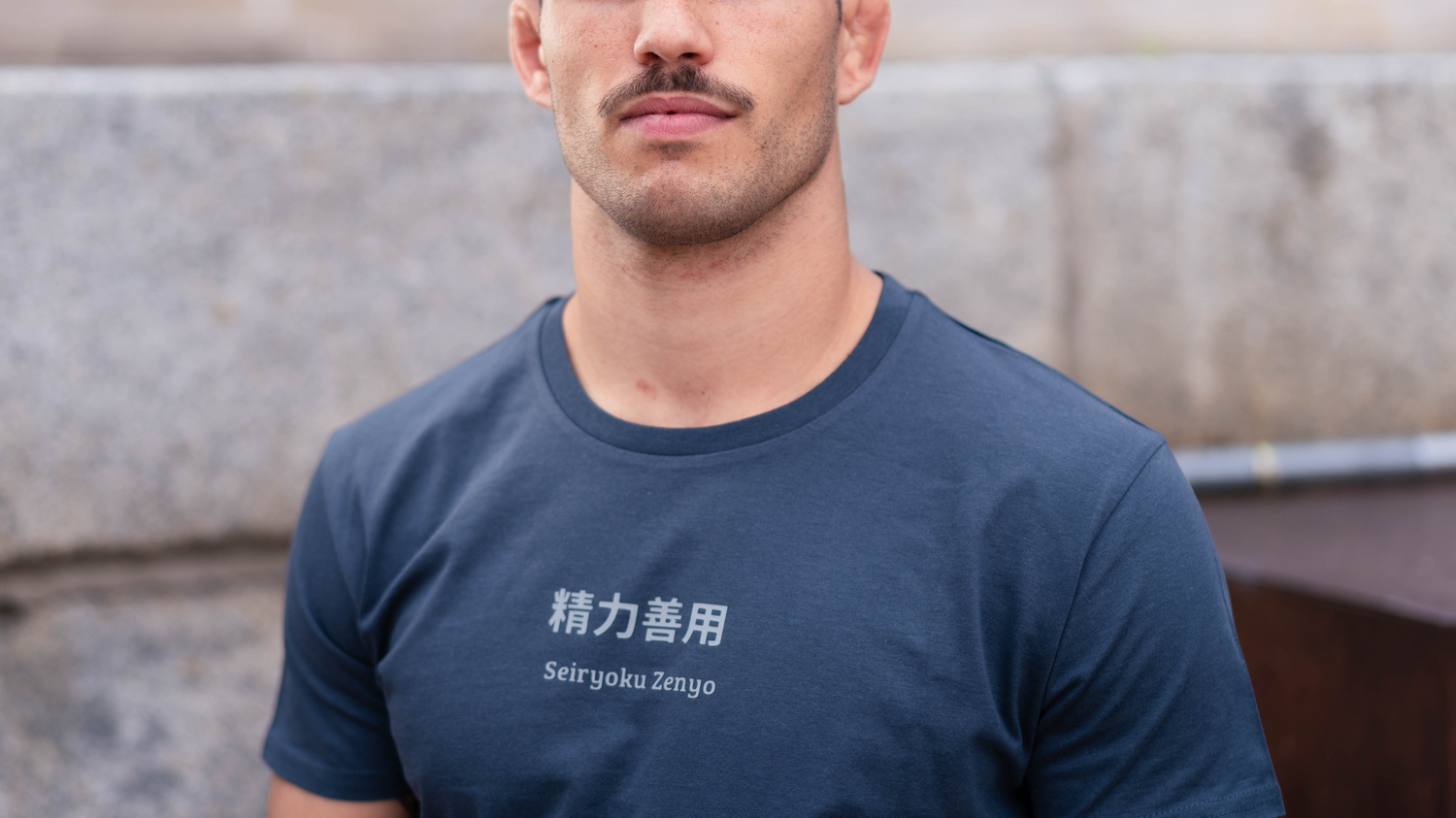
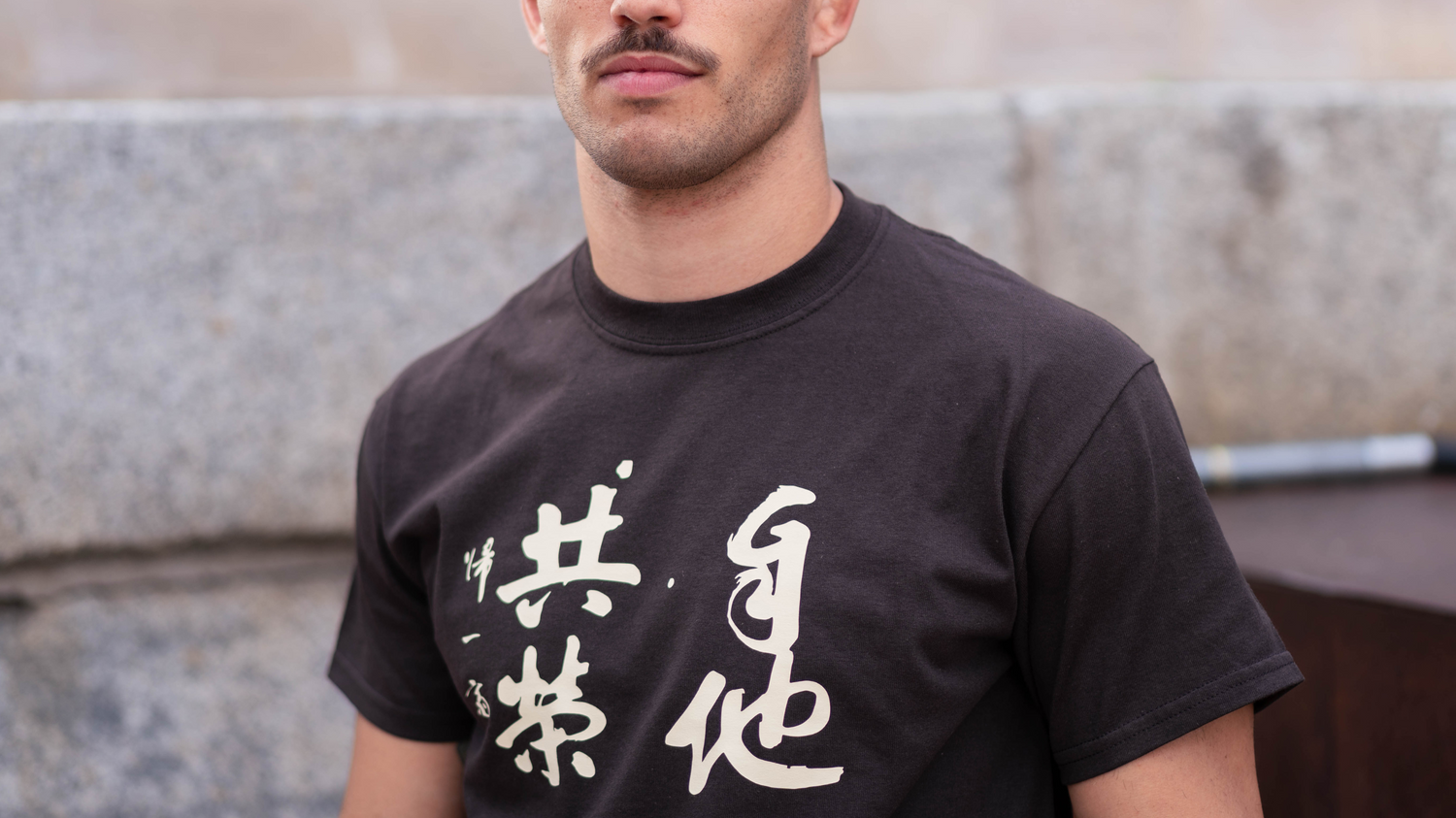
By wearing a graphic t-shirt with Jita Kyoei (mutual welfare and benefit) or Seiryoku Zenyo (maximum efficiency, minimum effort) motifs in an oversized cut, you are not just wearing fashion; you are extending the dojo mindset into your daily life without infringing on etiquette norms.
Compression Clothing vs. Oversized Clothing
To make informed decisions about your gear, it is vital to understand the function of each type of garment in your training arsenal.
|
Feature |
Compression Clothing |
Oversized / Loose Clothing |
|
Main Function |
Improved venous return, reduced muscle vibration, and structural support. |
Thermoregulation (heat retention), psychological comfort, and freedom of movement. |
|
Ideal Use Time |
DURING training (under the Gi or as No-Gi) and immediate post-exertion recovery. |
BEFORE (warm-up/Pump Cover) and AFTER (cool-down, commute home). |
|
Physiological Benefit |
Reduces perception of Delayed Onset Muscle Soreness (DOMS) and helps eliminate metabolites. |
Prevents abrupt muscle cooling after sweating ("thermal shock" effect) and allows air circulation. |
|
Sensory Impact |
"Second skin" feel, firmness, constant pressure. |
Feeling of spaciousness, softness, elimination of tactile restrictions. |
|
Aesthetics and Style |
Technical, athletic, reveals anatomy. |
Urban, streetwear, "incognito" or lifestyle aesthetic. |
|
Dojo Recommendation |
Wear as a base layer (Rashguard). |
Wear as an outer layer (Sweatshirt/Graphic T-shirt). |
The fine line between style and disrespect
The adoption of oversized style can lead to confusion if the situational awareness characteristic of a martial artist is not maintained. Here we identify the most frequent mistakes that damage your image and that of your school.
The "Full Gi" at the Supermarket:
-
This is perhaps the cardinal sin. Leaving the dojo with your Gi pants on and a street t-shirt might seem comfortable, but it is hygienically unacceptable. The pant legs collect dirt from the street that you will then bring to your partners' faces on the mat.
-
Correction: Wear loose-fitting sweatpants (joggers). They are easy to put on over compression shorts and respect the cleanliness of the tatami.

Confusing "Oversize" with "Incorrect Size":
-
Buying a generic XXXL t-shirt is not wearing oversized style; it's wearing something ill-fitting. The "Oversized Fit" pattern is specifically designed: the shoulders fall in the right place, the collar maintains its structure, and the length is balanced so it doesn't look like a nightgown.
-
Correction: Invest in brands that design specific patterns (like the Seiryoku Zenyo collection), where the ample cut is a design decision, not a sizing error.
Displaying Rank out of Context:
-
Wearing your belt around your neck or visibly in your bag in an ostentatious way violates the principle of humility (Rei).
-
Correction: Let your clothing speak for you subtly. A t-shirt with a well-designed Kanji communicates your passion to other initiates without needing to flaunt your technical level.
Keys to Building the Perfect Dojo Outfit
To successfully integrate this trend, we propose a layering system that maximizes functionality and style:
-
The Base Layer (Functional): A rash guard or compression shirt that manages sweat and maintains hygiene. This garment is never removed until showering.
-
The Mid-Layer (Style/Warm-up): This is where your oversized, heavy-weight cotton t-shirt comes in. It should be wide enough to allow complete mobility (shoulder rotation, stretching) without pulling at the seams. Natural cotton is preferable post-training due to its ability to let irritated skin breathe.
-
The Outer Layer (Protection/Incognito): An oversized hooded sweatshirt (Hoodie). This is your "Dojo Cover." It keeps you warm while waiting, protects you from the wind when leaving, and allows you to visually isolate yourself if you need concentration before an important match.
-
The Cultural Detail: Look for garments that incorporate traditional elements. It's not about putting a generic dragon, but about designs that respect history: references to Jigoro Kano, Bushido principles, or correct technical terminology. This differentiates the martial tourist from the true practitioner.
Conclusions
Fashion inside and outside the dojo is not superficial; it is an extension of our practice. The adoption of oversized clothing by the martial arts community responds to a real need for comfort, thermoregulation, and mental transition between the chaos of combat and the calm of daily life.
By choosing garments designed with the intentionality of the oversized cut and martial aesthetic, such as those offered in Dojo Style collections, you achieve three goals: you respect the sacred etiquette of the Gi, optimize your physical recovery through thermal management, and project an identity as a "Modern Warrior" who values both tradition and adaptation. The path (Do) does not end when you leave the tatami; your attire is a constant reminder that you carry the spirit of the dojo with you, wherever you go.